Preparing For A Power Outage Caused By Severe Weather
Recently I had the opportunity of witnessing a powerful storm that ripped through Pennsylvania knocking out power to over 100,000. While I did not get a power outage from this storm, many did. And I wanted to share my steps to preparing for severe weather.
Prelude To All of This
I have always been fascinated with weather, when I was 5 I remember getting the remenents of Hurricane Sandy, and walking outside to seeing downed limbs in the morning and shingles scattered in the yard. My favorite movie is also Twister, and still is to this day. I often find myself out following thunderstorms in my car, while nothing ever happens here close to the mountains where I live, there's always that itch that this might be the one. The one storm that finally brings me the satisfaction of witnessing a dangerous weather event.
But this most recent storm that came through I didn't have the time to pack the car and go out and chase it. I saw what the storm had done in more eastern parts of PA, and there was a mass of unstable conditions that could turn this already bad storm into a really nasty storm. I needed to prepare the house to weather a storm.
Be Proactive Not Reactive
When I get wind that something is about to go down, I think of the possible scenarios and their outcomes. This is being proactive. When you hear about something but hold off on actually doing something until it already happened. This is called being reactive.
Why is being reactive bad? To make this simple, you don't wait to fill your car up with gas until its empty right? Your car is no good with no gas just as a grocery store after Hurricane Katrina.
PACE planing
A PACE plan is basically a plan for a plan. It's meant to be redundant and adaptable. So if your main plan fails, you have a backup. PACE stands for;
- Primary
- Alternate
- Contingency
- Emergency
Keep in mind your plan should not be in just your head. It should be written on paper and stored digitally somewhere so you can revise it easier. Most importantly, it should be easy to understand.
Creating Our Plan
I am going to create a mock PACE plan for losing power. Let say I live in a 2 bedroom 1.5 bathroom apartment and its connected to city power and water. I have access to a patio facing west. Now why is this important? Lets create our plan.
- Primary
- For our primary plan for electricity will be using a small propane powered generator. It's one of the most overlooked fuels for generators, yet it's very easy to store and acquire.
- Another item we can rely on are uninterruptible power supplies. These are really only good for the first 15 minutes of a power outage, but if were dealing with voltage stability problems or quick outages for 1 or 2 minutes they can work very well.
- Alternate
- I would use a solar + battery backup system. Whats nice about this is the battery backup can be as big or as small as you need. Same with the solar panels. I created my own 12v 30ah battery backup. It fits all in a ammo can and can handle 10 amps of solar input. I mostly built this for camping but it would work perfectly in an apartment.
- Contingency
- In my contingency plan you may notice a few things shift. I would pay attention.
- I would introduce power rationing to conserve the life of the battery, restricting my usage of electronics, lights, refrigeration so I can continue using electronics vital for communication and receiving news.
- I would bring the battery to public aid centers and charge it there if they have generators running.
- Emergency
- I would resort to using stored Alkaline batteries to power my needs, and using a hand crank to power other things.
An Aging Grid
Power can go out when the weather is bad, and I wouldn't count on the grid to come back online quickly, and if your state is listed as top 10, you should have a very detailed list on how to deal with losing electricity. This brings me into the health of our grid, and it isn't looking to good.
How Old Is Our Grid Really?
Our infrastructure might be older then some of the people reading this. With 70% of transformers being over the age of 25 years old, well past their intended service life. And some core transmission infrastructure being almost 70 years old. We already see an increasing trend of power outage in many places. We can see the power outage trend increasing especially in Texas.
Some DIY Solar Power Ideas.
Over the years I have been working on this portable power can. It's a battery stuffed inside a ammo can with a solar charge controller, couple of switches, USB ports and a 12v socket.
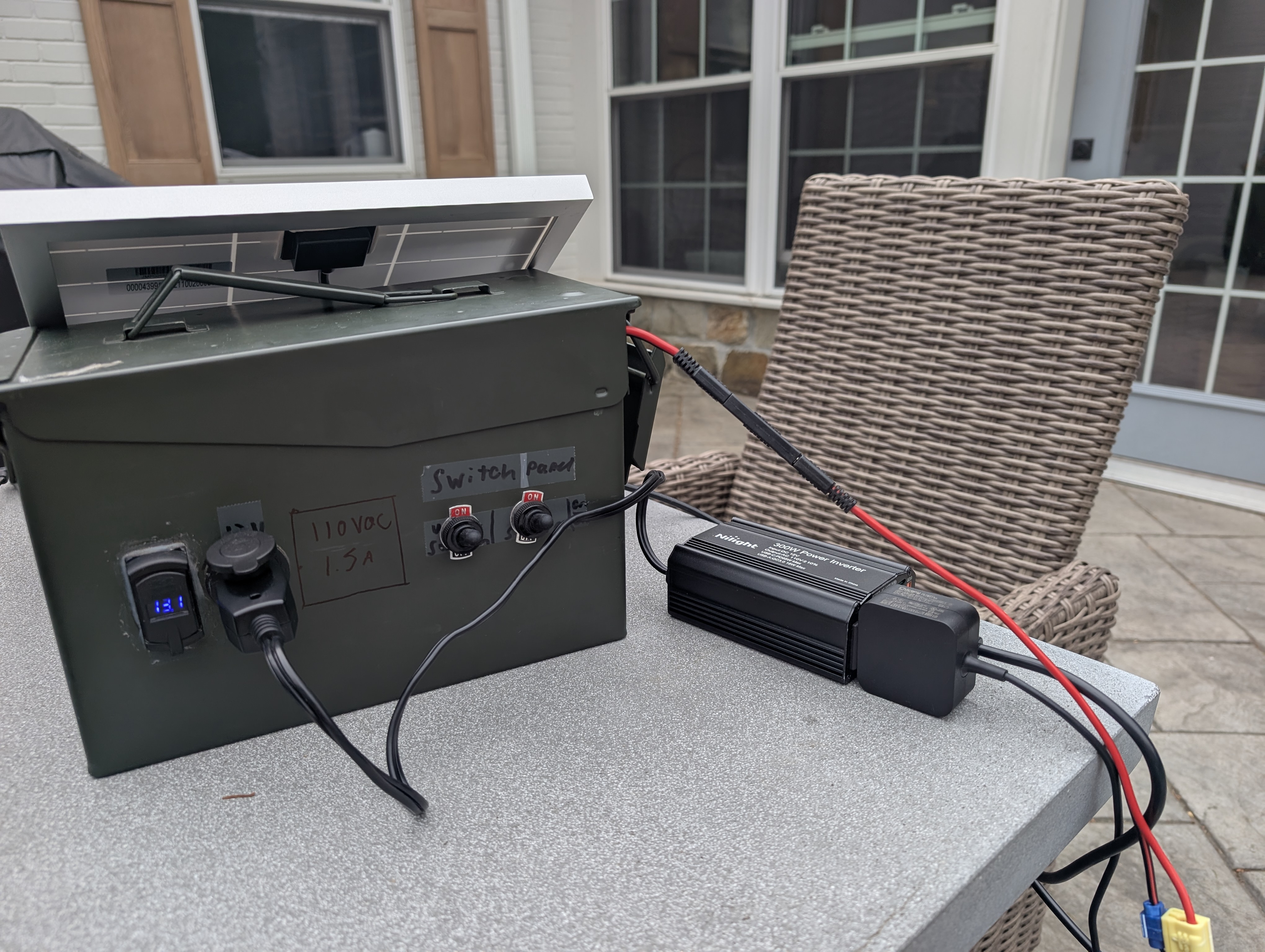
If you want to build this, here's my parts list;
- Any metal .50 cal ammo can will do
- Eco-worthy 12v 30ah LIPO4
- Eco-worthy 25 watt solar panel
- Renogy 12/24v 10a solar charge controller
- Any USB voltage meter will do
- Any 12v marine socket will do.
And if your have a lot of battery operated power tools. It's likely they make a power inverter for some of them too that you could use.
A Little About Propane Generators.
When I was looking into what kind of generators to use for an emergency, I was going to go with diesel. While that is a good choice for larger loads, I am trying to keep this practical. Propane generators just make sense when it comes to this. If there is a really bad power outage everyone will be at the pump filling up cars and fuel jugs. That's the main reason why I chose propane. I also took into consideration that propane has a much better shelf life then gasoline, and may offer some saving in the long term over gas due to reduced maintenance.
Another thing I want to talk about in the accessibility of propane, it's everywhere. You can get it at gas stations, hardware stores, grocery stores and even some dollar stores carry it. If your like me, and if you heat your house with propane, you can run your generator off that big ol tank to.
When The Lights Come Back On
This is the thing all people look forward to when there's a power outage. But maybe you should turn some switches off to prevent some electronics from getting damaged in a power surge. But now that the lights are back on, I am going to leave off here. If you enjoyed this blog, remember to check out some other blogs I have.